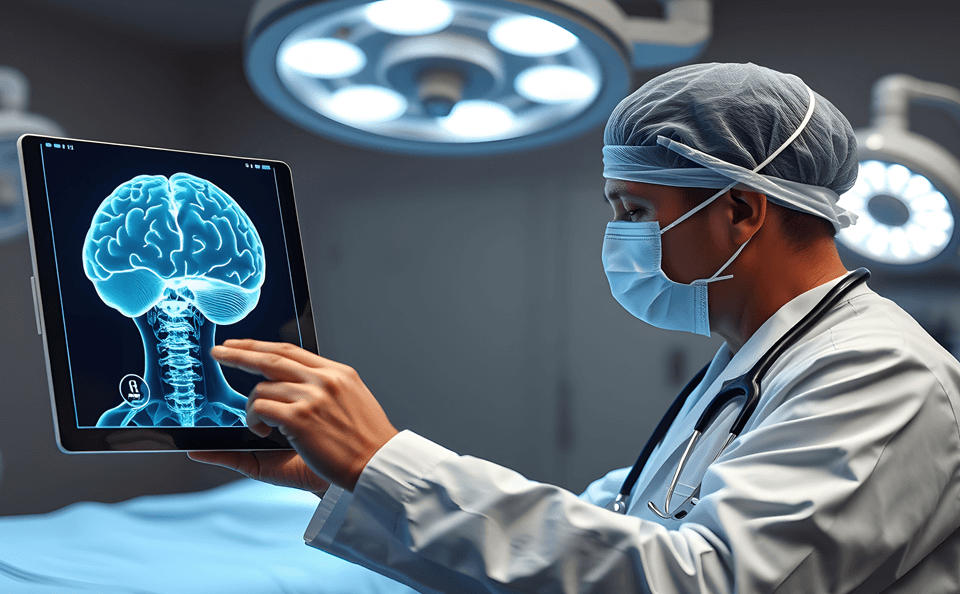
Latest Advances in Brain and Spine Surgery How Technology is Making Surgeries Safer
More than in any other medical field, the technology and medical science world uses and develops new technologies to address patient and surgeon needs and concerns in the field of brain and spine surgeries. As the procedures become less invasive, faster, and more precise, the risk factors decrease. There is incredible technology being developed in assistance, artificial intelligence, and technologies that integrate 3D designs of the patient and augmented reality. With these new aids, the risk factors of the procedures are decreased.
In this article, we focus on new technology and methods being developed and implemented in brain and spine surgery, the safety of the increasingly intricate procedures, and the impact on the entire healthcare situation and future trends in medicine while developing practices. These trends describe the future of the healthcare and technology ecosystems and the other collaborative domains.
1. Assisted Neurosurgery: Precision Beyond Human Hands
The new technology is changing the way brain and spine neurosurgery procedures are performed. These systems are now able to integrate the intricate and meticulous hand movements of a doctor.
Patients experience the benefits with less pain, quicker recovery, and lower complications. The surgery also benefits the hospitals with better safety, outcomes, and consistency.
The most challenging aspect of performing brain or spine surgery is the “black box” Centre within the sensitive neurosurgical procedure. Intraoperative MRI (iMRI) and CT scanning allow for “seeing” the brain or spine as surgery progresses.
These systems enhance the overall excellence of the surgery by pinpointing problem areas like bleeding and abnormal tissues that need addressing before closing the procedure. This advancement also minimises the need to perform surgery in the follow-up.
The incorporation of advanced imaging systems into the surgery significantly improves, in real-time, the quality and control of the outcome.
The safety and success rates of brain and spine surgery are increasing.
Machine learning algorithms assess and analyse a range of data and risk factors, which include medical data, MRI scans, surgical history, etc., and provide recommended surgical approaches and complications which could arise before the procedure.
Predictive technology also aids in enhancing the recovery process through monitoring analytics and post-operative care by predicting possible complications that could arise post-op.
The current predictive analytics will lead to data-driven, customized, and proactive surgery, enhancing the safety of the procedure and the expected outcomes.
AR technology enhances surgical planning by providing 3-D immersive experiences. Surgeons can visualize vital 3D structures (like veins and nerves) in real time during surgery. VR technology assists surgical simulation by creating a risk-free digital space where surgeons can perform surgery steps they will perform on patients.
New advancements in technology help not only in training but also in the accuracy of procedures and in visually presenting and aiding informative materials for patients. This helps bridge the divide between medical practitioners and everyday individuals.
2. Minimally Invasive Spine Surgery (MISS): Smaller Incisions, Faster Recovery
No longer does spine surgery require long recovery periods and large, invasive cuts. Techniques in minimally invasive spine surgery have changed this. By using advanced imaging, small incisions, and tubular retractors, surgeons are now able to reach the spine and maneuver around the spine to avoid damaging the tissues that are closely surrounding the spine.
Patients who have spine issues lose blood, have minimal scarring, and spend less time in the hospital. They have a much quicker recovery and can resume everyday activities sooner. The guided endoscopic cameras and other surgical tools provide greater precision and enhanced safety, which lowers the risks associated with this type of surgery in comparison to open surgery.
Patients with spinal stenosis or a herniated disc will have a quicker recovery that is safe and less risky overall.
3. 3D Printing in Neurosurgery: Customized Solutions
Neurosurgery involving 3D technology is innovative and fascinating.
Surgeons can create and print an exact 3D replica of a patient’s skull or spine using design software and CT scans. This aids in planning a surgery and practicing advanced techniques for difficult procedures.
Sometimes, custom 3D printed implants are created to match a patient’s specific anatomy. This results in greater stability and a prosthetic that lasts longer. This personalized approach reduces risk and improves overall quality of life post-surgery.
Through the integration of CT and MRI scans, neuro-navigation technology provides precise 3D real-time guidance during tumour removal or repair of brain abnormalities. This improves the time and structural protection during the surgery. Even for complex brain procedures, the technology saves time, reduces surgical risk, and minimizes the overall risk.
The advancements in techniques are a culmination of perfecting patient-centred safety. The use of AI and AR technology in neurosurgery is the new frontier.
For businesses and innovators, understanding the evolution of technology in healthcare is crucial. How fast groundbreaking techniques and technologies get integrated within treatment and recovery processes is astonishing. World-class, safe, and effective Neurology surgery techniques are offered at East Point Hospital in Avalahalli, Bengaluru.
Though technology is improving in many sectors, emphasis on patient safety and post-operative outcomes is and will remain the fundamental objective.
FAQs
1. Why are assisted brain surgery techniques safer than traditional brain surgery techniques?
When it comes to brain and spine surgeries, those performed with the aid of assisted technology are more stable, precise, and less likely to cause damage to critical areas of the brain and spine. Also, these techniques are more minimally invasive; therefore, the recovery time is significantly reduced.
2. What role does artificial intelligence play in brain and spine surgery?
AI helps in the formation of surgical plans, predicting surgical outcomes, risk assessments, and aids in decision-making through surgical data, patient data, and medical imaging analysis.
3. Are minimally invasive spine surgeries appropriate for everyone?
However, patients with a slipped disc or spinal compression will likely qualify. A diagnosis and imaging will help a neurosurgeon determine this.