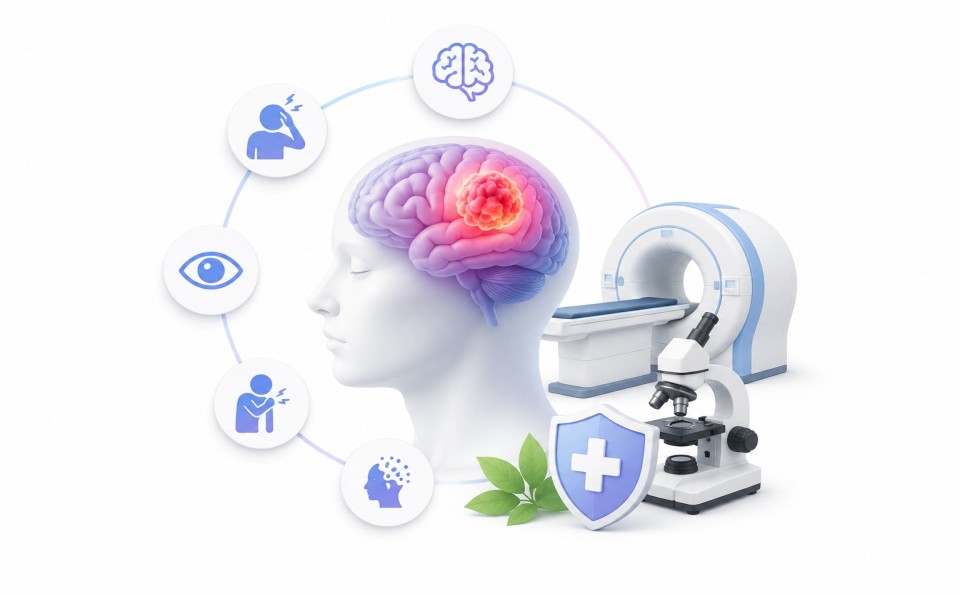
Brain Tumors: Early Warning Signs, Diagnosis, and Modern Treatment Approaches
The brain is the control center of the human body, responsible for regulating movement, memory, speech, emotions, breathing, and vital bodily functions. Any abnormal growth within the brain can interfere with these functions and significantly affect a person’s health and quality of life. Brain tumors are among the most complex neurological conditions, requiring early diagnosis and specialized medical care for optimal outcomes. A brain tumor refers to an abnormal growth of cells within the brain or surrounding structures. These tumors may be benign (non-cancerous) or malignant (cancerous), and their impact depends not only on their type but also on their size and location. Even non-cancerous tumors can become dangerous if they exert pressure on critical areas of the brain. At East Point Hospital, advanced diagnostic facilities, neurological expertise, and multidisciplinary care play a vital role in the early detection and management of brain tumors.
Understanding Brain Tumors
Brain tumors develop when cells in the brain begin to grow uncontrollably. Normally, cells grow, divide, and die in a regulated manner. However, due to genetic mutations or other unknown triggers, abnormal cell growth may occur, forming a mass or tumor.
Brain tumors are broadly classified into:
- Primary brain tumors, which originate within the brain
- Secondary or metastatic tumors, which spread to the brain from cancers elsewhere in the body
Primary brain tumors may arise from different types of brain cells, including glial cells, meninges, nerves, and glandular structures.
Benign vs Malignant Brain Tumors
Benign brain tumors grow slowly and usually do not spread to other parts of the body. However, because the skull is a confined space, even benign tumors can cause serious neurological symptoms due to pressure on surrounding brain tissue.
Malignant brain tumors grow rapidly, invade nearby tissues, and may recur even after treatment. These tumors require aggressive management and close follow-up.
The severity of symptoms often depends more on the location of the tumor rather than whether it is benign or malignant.
Causes and Risk Factors
The exact cause of most brain tumors remains unknown. However, certain factors may increase the risk.
These include:
- Genetic predisposition
- Exposure to radiation
- Family history of certain neurological disorders
- Previous cancers that may spread to the brain
In most cases, brain tumors develop without any identifiable cause.
Research continues to explore environmental and molecular factors involved in tumor development.
Common Symptoms of Brain Tumors
Symptoms vary depending on the tumor’s size, location, and rate of growth. Early recognition of symptoms is extremely important for timely diagnosis.
Persistent Headaches: One of the most common symptoms is a persistent headache that gradually worsens over time. These headaches may be more severe in the morning or associated with vomiting.
Seizures: Brain tumors can disrupt normal electrical activity in the brain, leading to seizures even in individuals with no prior history of epilepsy.
Nausea and Vomiting: Increased pressure within the skull can cause nausea and unexplained vomiting, particularly in the early morning hours.
Vision and Hearing Problems: Tumors affecting specific regions of the brain may lead to blurred vision, double vision, hearing loss, or balance disturbances.
Weakness and Coordination Problems: Patients may experience weakness in the arms or legs, difficulty walking, or impaired coordination due to pressure on motor control areas.
Cognitive and Personality Changes: Changes in memory, concentration, mood, speech, or personality can occur when tumors affect higher brain functions. Family members are often the first to notice behavioral changes in affected individuals.
Importance of Early Diagnosis
Early diagnosis significantly improves treatment outcomes and reduces the risk of complications. Delayed diagnosis can lead to increased pressure inside the skull, neurological deficits, and reduced treatment effectiveness. Individuals experiencing persistent neurological symptoms should seek immediate medical evaluation rather than ignoring symptoms or relying solely on self-medication.
Diagnostic Evaluation: Accurate diagnosis requires a combination of clinical examination and advanced imaging techniques.
Neurological Examination: Doctors assess reflexes, coordination, vision, hearing, muscle strength, and mental function to identify abnormalities.
MRI Scan: Magnetic Resonance Imaging (MRI) is the gold standard imaging technique for evaluating brain tumors. It provides detailed images of brain structures and helps determine tumor size, location, and characteristics.
CT Scan: CT scans may be used in emergency settings or when MRI is not feasible.
Biopsy: A biopsy involves obtaining a tissue sample for microscopic examination. This confirms the tumor type and helps guide treatment planning.
Modern Treatment Approaches
Treatment depends on the tumor type, location, size, and overall health of the patient.
Surgical Management: Surgery is often the first line of treatment for accessible brain tumors. The goal is to remove as much of the tumor as safely possible while preserving brain function. Advancements in neurosurgical techniques and imaging guidance have improved surgical precision and patient safety.
Radiation Therapy: Radiation therapy uses high-energy beams to destroy tumor cells or prevent further growth. It may be used after surgery or as primary treatment in certain cases.
Chemotherapy: Chemotherapy involves medications that target rapidly dividing cancer cells. It is commonly used in malignant brain tumors.
Targeted and Advanced Therapies: Newer treatment approaches focus on targeting specific molecular pathways involved in tumor growth, improving effectiveness while minimizing side effects.
Rehabilitation and Supportive Care: Recovery from brain tumors often requires rehabilitation services such as physiotherapy, speech therapy, occupational therapy, and psychological support. Rehabilitation helps patients regain independence and improve quality of life following treatment.
Complications of Brain Tumors
Untreated or advanced brain tumors can lead to:
- Increased intracranial pressure
- Permanent neurological deficits
- Seizures
- Vision loss
- Cognitive impairment
- Life-threatening brain herniation
Prompt treatment significantly reduces these risks.
Emotional and Psychological Impact
A diagnosis of brain tumor can be emotionally overwhelming for both patients and families. Anxiety, fear, and uncertainty are common.
Counseling and emotional support are important components of comprehensive care and help patients cope with the challenges of treatment and recovery.
Role of Specialized Neurological Care
Brain tumors require coordinated management involving neurologists, neurosurgeons, radiologists, oncologists, rehabilitation specialists, and critical care teams. At East Point Hospital, multidisciplinary care, advanced imaging, and patient-centered treatment ensure accurate diagnosis and comprehensive management of neurological conditions.
Conclusion
Brain tumors are complex conditions that require early recognition, accurate diagnosis, and timely treatment. Persistent neurological symptoms should never be ignored, as early intervention can significantly improve outcomes and quality of life. At East Point Hospital, we are committed to providing advanced neurological care supported by modern diagnostic facilities and expert medical teams. If you or your loved ones experience persistent headaches, seizures, or neurological symptoms, we strongly encourage early medical consultation. Timely action can make a critical difference in recovery and long-term health.